

Collection by designer Harry Bertoia - Buro International
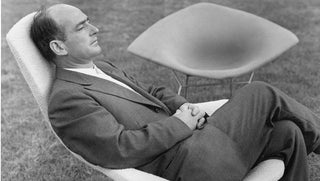
Designer
Harry Bertoia
Collection by Harry Bertoia


Configurable


Configurable


Configurable
Get expert advice in one of our physical showrooms
Family business with 40+ years of experience in office and complete interior fit-out.
4.8/5 Excellent ★★★★★ based on 100+ reviews
Get expert advice in one of our physical showrooms
Family business with 40+ years of experience in office and complete interior fit-out.
4.8/5 Excellent ★★★★★ based on 100+ reviews
Designer
Harry Bertoia was a versatile and gifted artist. Knoll historian Brian Lutz once said: "Bertoia's paintings were better than his sculptures. And his sculptures were better than his furniture. And his furniture was absolutely brilliant."
After studying at Detroit Technical High School and the Detroit School of Arts and Crafts, Harry Bertoia opened his own metal workshop at Cranbrook, where he taught jewellery design and metalworking. In 1946 he moved to California to help fellow Cranbrook alumnus Charles Eames develop methods for laminating and bending plywood. Bertoia's contributions to the famous Eames chairs were crucial, if not as well known.
On the advice of Herbert Matter, who had worked side by side with Eames and Bertoia, Florence and Hans travelled to California and encouraged Bertoia to move east and set up his own metal workshop in a corner of Knoll's production facility. Florence had been taught by Bertoia at Cranbrook and was convinced that he would produce something extraordinary if given the time and space to experiment.
Typical of the early environment at Knoll was that Hans and Florence never demanded that Bertoia design furniture, but instead encouraged him to explore whatever he wanted. They simply asked that, if he discovered something interesting, he would show it to them. It will come as no surprise that Harry Bertoia came up with something remarkable. His iconic wire furniture collection, introduced in 1952, is recognised worldwide as one of the great achievements of 20th-century furniture design.
Although he designed only one furniture series, Bertoia remained involved in the Knoll story by supplying sculptures and architectural installations for Planning Unit projects. For example, he designed an altar for the MIT Chapel, designed by Eero Saarinen. Bertoia spent the next 25 years of his life experimenting with light, sound and volume through sculptures, paintings and architectural installations.
Today, Knoll carries on Harry Bertoia's legacy of innovation, inspiration and beauty with the Bertoia collection, which has been in continuous production worldwide since its introduction. In 2005, Knoll introduced the Asymmetric Lounge, a design from Bertoia's early experiments that had never been put into production.
Why choose Buro International:
Family business with 40+ years of experience in office and complete interior fit-out
On request, we assemble your furniture on site
Come and get inspired and discuss your ideas with our advisors